





Fynbos Art at Home: Cape Heath Prints from Karoo Farmhouse to Coastal Modern

Quick Answer
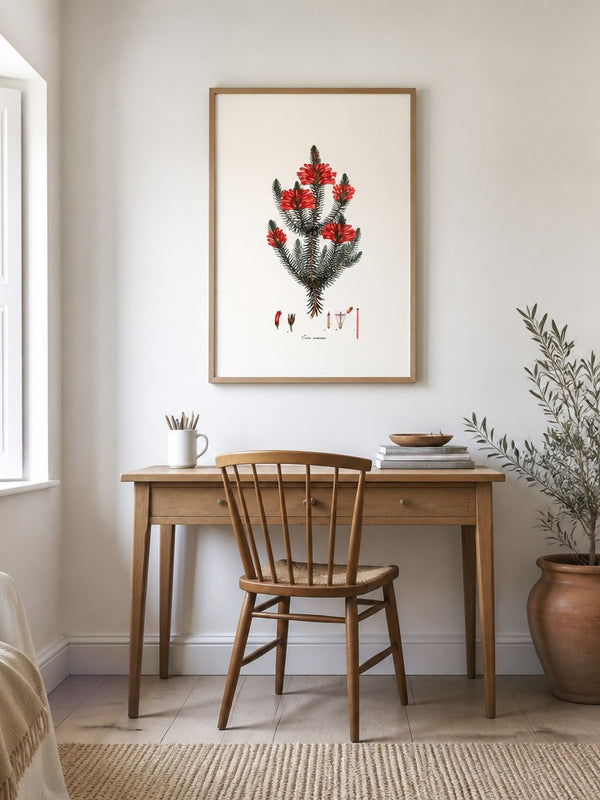
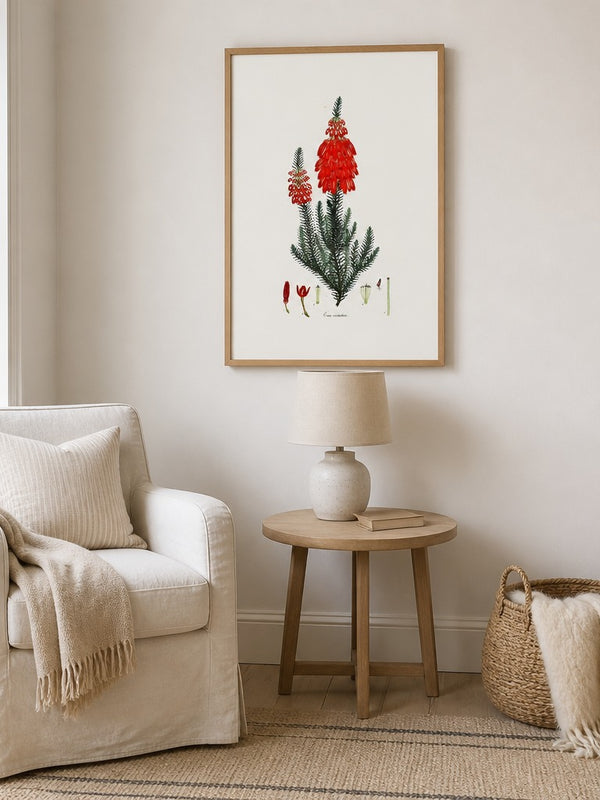
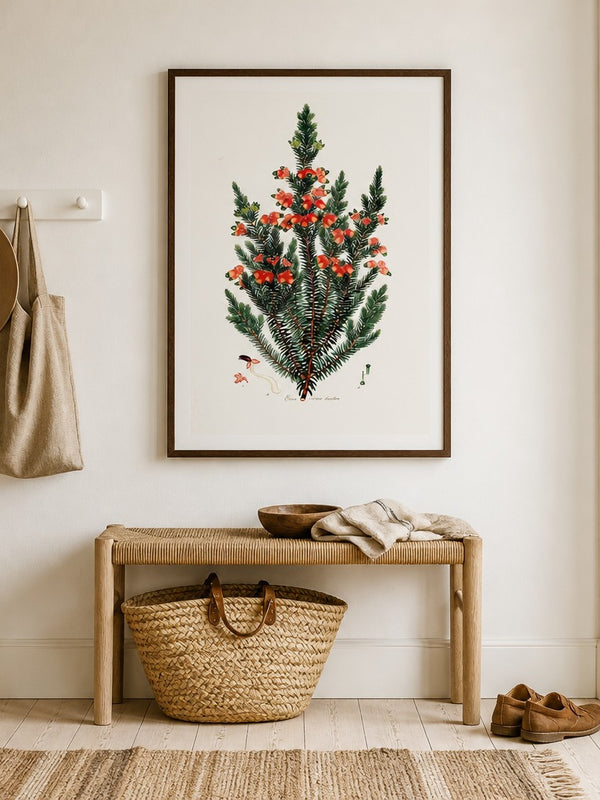
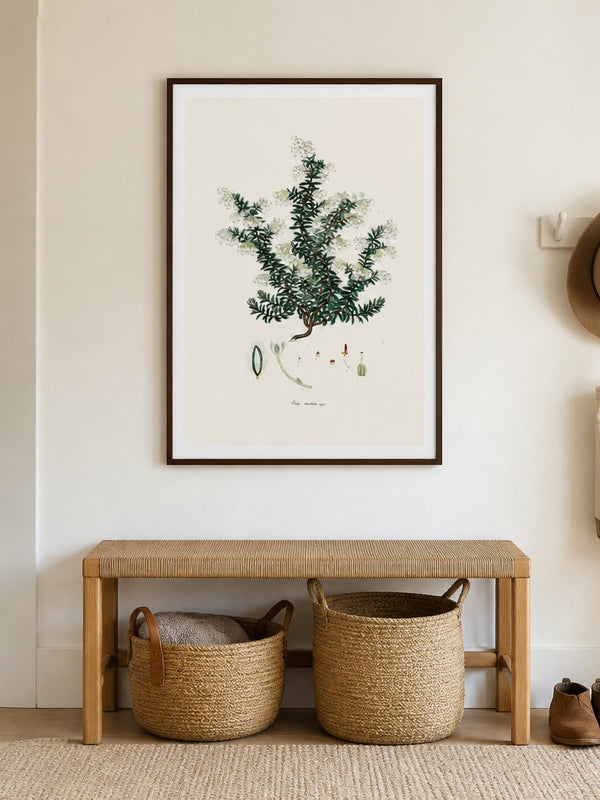
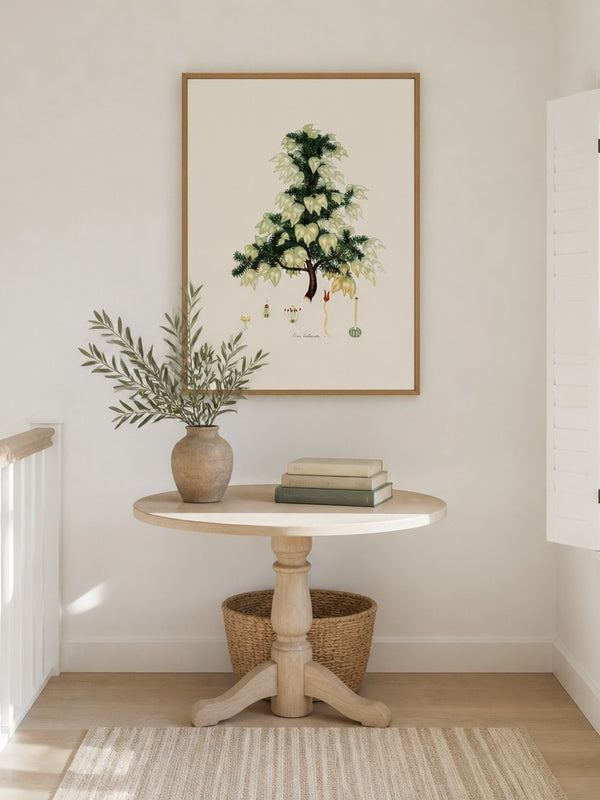
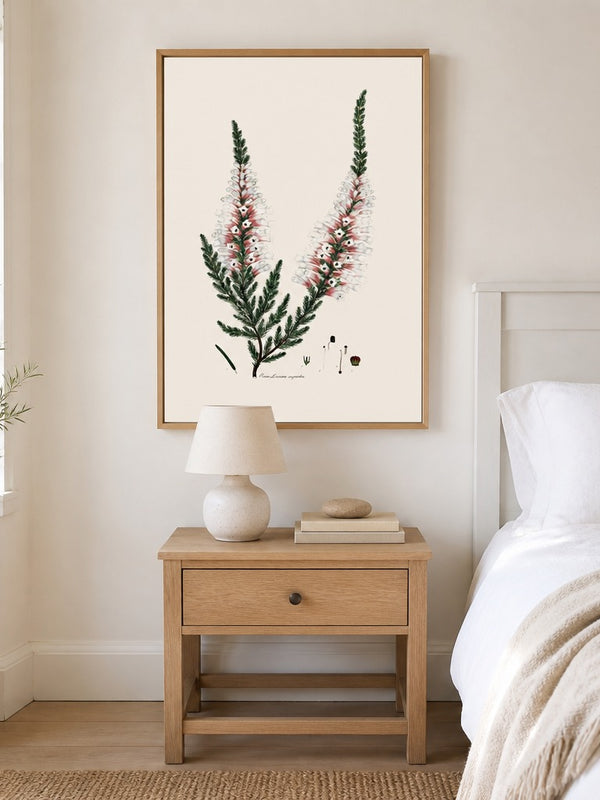
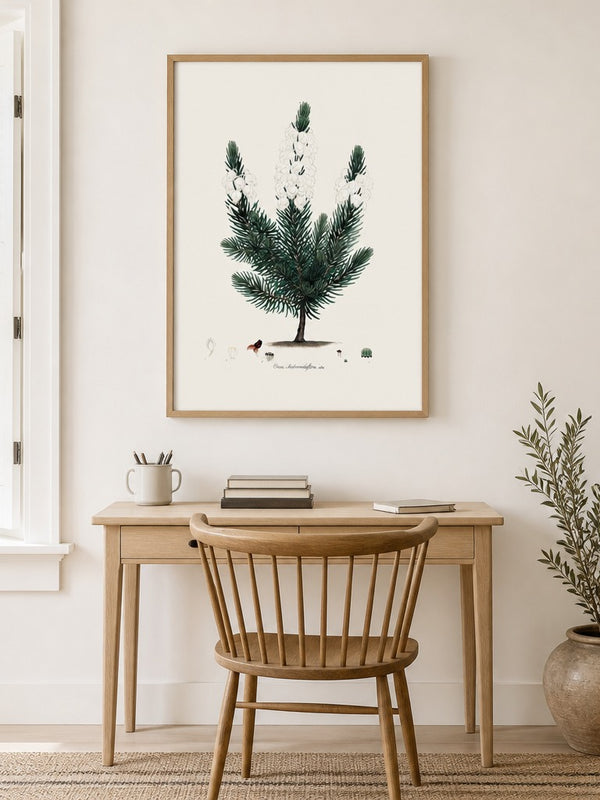
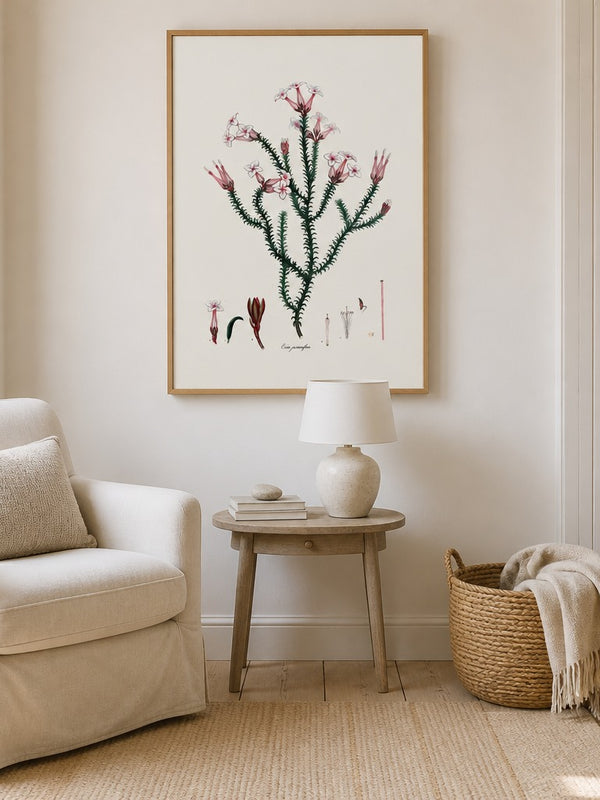
- Our fynbos prints come from Henry Andrews' engravings of Cape heaths (Erica), published in London between 1794 and 1830. Each plate shows the whole plant, its flower parts and its species name.
- In a traditional Karoo farmhouse, hang one print on its own against a whitewashed wall, in a dark frame, over old wood.
- In a modern home or a modern beach house, go bigger and simpler: an A2 or A1 print in a Black, White or Light Oak Look frame on a plain wall.
- Choose by colour first. The 42 prints fall into five groups: red, pink, orange, yellow and white.
- For a pair or a set, keep to one colour group and one frame, and let the species change.
Fynbos is the Cape's own plant world, and these prints bring it indoors. They hang as well in an old farmhouse as in a glass-fronted beach house. Here is how to make them work in each.
Shop the collection
Shop our curated collection of wall art prints
Fynbos of South Africa · 42 prints
-
 Erica coccineaFrom R 485.00
-
 Erica corinthioidesFrom R 485.00
-
 Erica droseroidesFrom R 485.00
-
 Erica formosaFrom R 485.00
-
 Erica mammosaFrom R 485.00
-
 Erica monadelphaFrom R 485.00
-
 Erica verticillataFrom R 485.00
-
 Erica vestita coccineaFrom R 485.00
-
 Erica salisburiaFrom R 485.00
-
 Erica sebana spicataFrom R 485.00
-
 Erica vernix longifloraFrom R 485.00
-
 Erica barbata majorFrom R 485.00
-
 Erica halicacabaFrom R 485.00
-
 Erica linnaea superbaFrom R 485.00
-
 Erica andromedaeflora albaFrom R 485.00
-
 Erica coloransFrom R 485.00
-
 Erica jasminifloraFrom R 485.00
-
 Erica monsonianaFrom R 485.00
-
 Erica sessilifloraFrom R 485.00
-
 Erica conspicuaFrom R 485.00
-
 Erica curvifloraFrom R 485.00
-
 Erica cruciformisFrom R 485.00
-
 Erica depressaFrom R 485.00
-
 Erica foliaceaFrom R 485.00
-
 Erica glutinosaFrom R 485.00
-
 Erica petiverianaFrom R 485.00
-
 Erica sulphureaFrom R 485.00
-
 Erica magnificaFrom R 485.00
-
 Erica rugosaFrom R 485.00
-
 Erica aristata minorFrom R 485.00
-
 Erica comosa rubraFrom R 485.00
-
 Erica comptonianaFrom R 485.00
-
 Erica costataFrom R 485.00
-
 Erica cruentaFrom R 485.00
-
 Erica obbataFrom R 485.00
-
 Erica quadrifloraFrom R 485.00
-
 Erica ramentaceaFrom R 485.00
-
 Erica taxifoliaFrom R 485.00
-
 Erica elataFrom R 485.00
-
 Erica exudaFrom R 485.00
-
 Erica grandifloraFrom R 485.00
-
 Erica splendensFrom R 485.00
























Where the prints come from
A London engraver and a Kew plant hunter
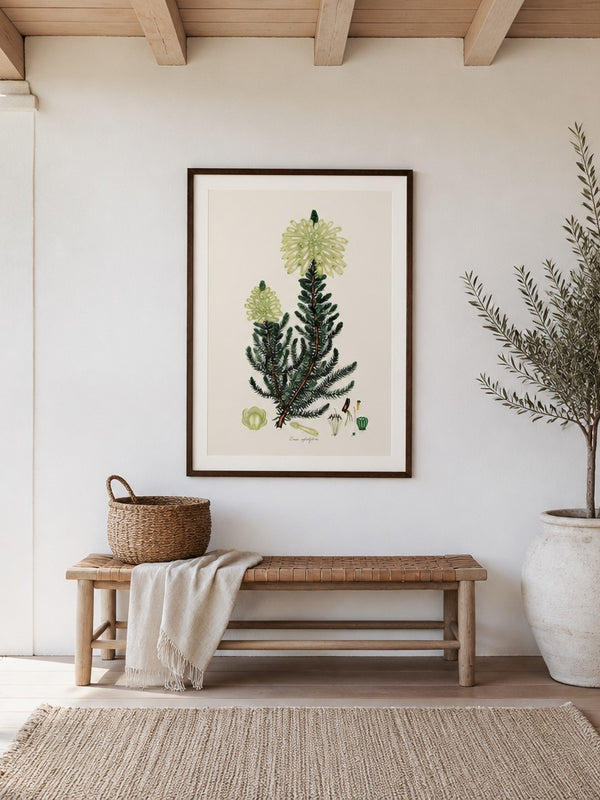
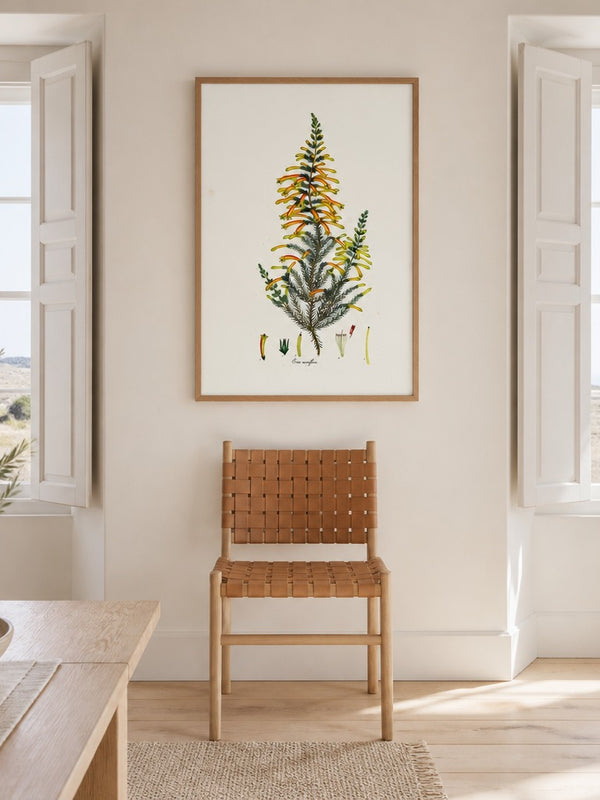
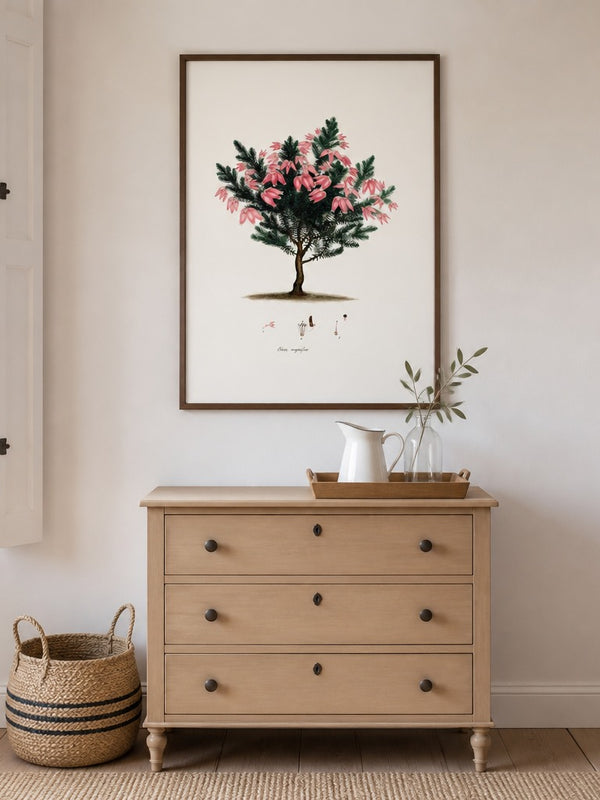
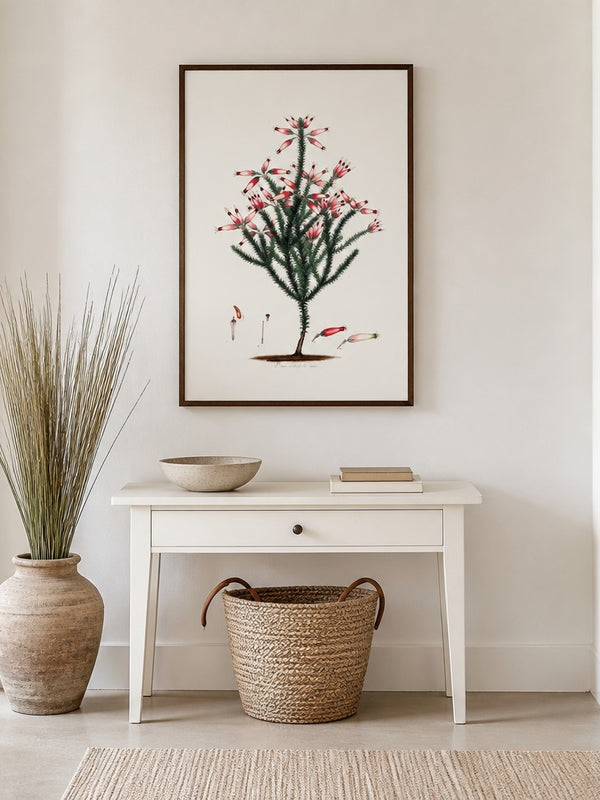
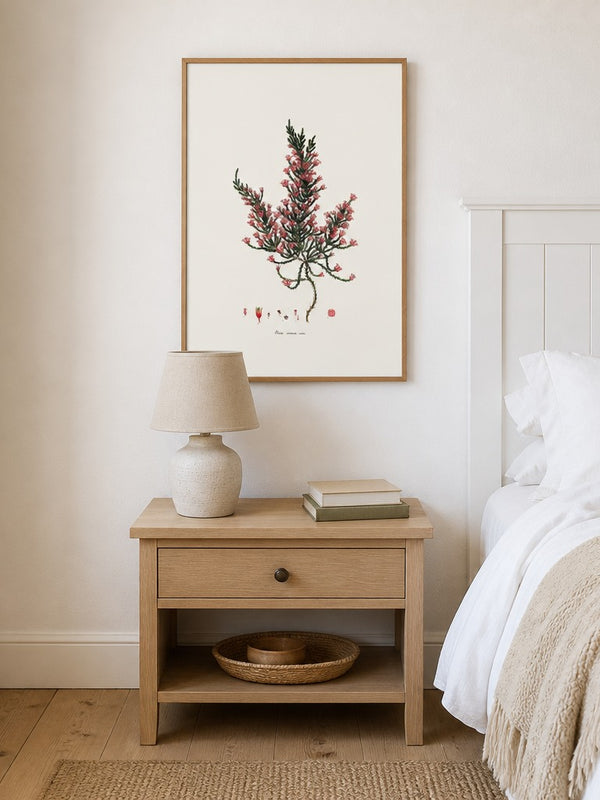
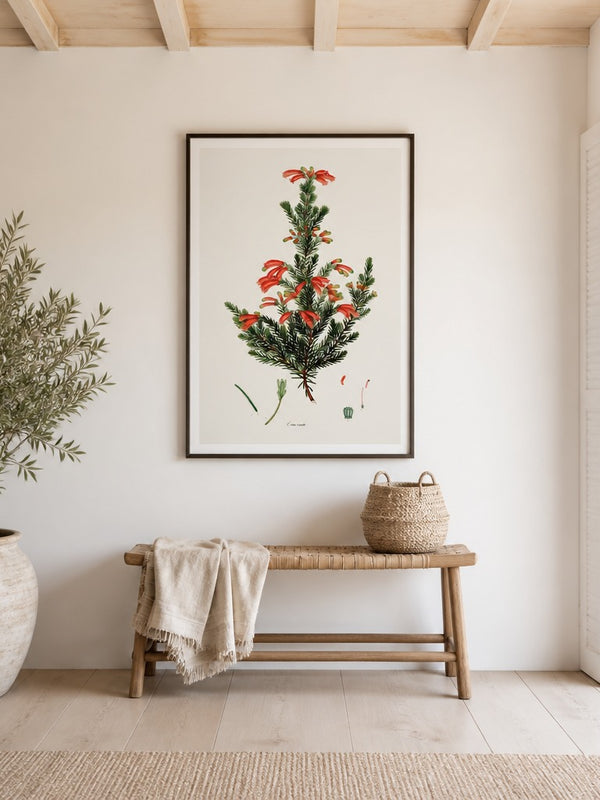
The prints in our Fynbos of South Africa collection come from the heath engravings of Henry Andrews, whose Coloured Engravings of Heaths came out in four volumes between 1794 and 1830. We matched 41 of our 42 species names to plates in his published volumes. On his title page he promised drawings "taken from living plants only", each with dissections of the flower, magnified where needed. That is the row of small studies you see along the bottom of every plate.
Many of those living plants reached England through Francis Masson, Kew's first plant hunter. He landed at the Cape in 1772 and, by the time he left in 1775, had sent more than 500 species back to England. Cape heaths became a craze in British gardens, and Andrews drew them from the plants in those greenhouses.
Why that matters on your wall
These are working botanical plates, not decoration painted to look old. The plant is drawn to be identified, so each print carries a real species name and real proportions. If you want the background on how plates like these were made, our piece on the craft of botanical illustration covers it.
The plants themselves come from the Cape Floral Region, which UNESCO describes as the smallest of the world's six floral kingdoms. About 69% of its estimated 9,000 plant species grow nowhere else, and more than 600 of them are Ericas.
In a traditional Karoo farmhouse
Start with the walls
Old Karoo houses were built for a dry country short of timber. Many had flat brak-clay roofs laid over reeds and beams, later replaced by corrugated iron. If your walls are whitewashed or lime-plastered, they are warm, slightly uneven and bright. The plates are printed on a soft linen-toned ground that sits comfortably against that, where a stark white background would look clinical.

One print, old wood, a dark frame
If the room holds solid old pieces, such as a kist, a riempie bench or a yellowwood table, give each one a single print centred above it rather than a gallery wall. A dark frame (Black or Dark Kiaat Look) picks up the old wood. The reds and oranges are the strongest choice here, because they hold their own against dark timber and deep window reveals.
Let the plant explain itself
Ericas are fynbos plants of the Cape, and the Karoo is its own pair of biomes, the Succulent and the Nama Karoo. In a farmhouse that difference is the point: the print brings the green, flowering Cape into a dry-country house. If you would rather stay with the plants outside your stoep, our vintage aloe and succulent prints are the Karoo's own.
The same plate reads as heritage on a whitewashed farmhouse wall and as colour in a white beach house. Only the frame changes.
In a modern home
Go larger and plainer
Modern rooms have more wall, fewer objects and harder lines: steel windows, concrete, plaster. A single small print gets lost. Go up a size or two, to A2 or A1, and hang one print where the eye lands first, such as between windows or at the end of a passage.

Use the white space on the plate
Andrews drew each plant on a wide, empty ground. In a minimal room that space does the work a mount would do, so a slim Black or Light Oak Look frame is enough. Tall, single-stem species such as Erica salisburia suit narrow walls; bushy ones such as Erica magnifica suit wide ones.
Pick one bold colour
Yellow and red read as graphic accents against grey, black and concrete. If the room already has strong colour, the white group keeps it calm. For other plates in the same spirit, our newer Flore d'Amérique prints pair well with the fynbos range.
In a coastal home
Traditional coast: whitewash again
The traditional Cape coast is whitewashed too. Paternoster, one of the oldest fishing villages on the West Coast, is known for its white-washed fishermen's cottages. In a cottage like that, treat the prints as you would in a farmhouse: one per wall, simple frames, with the pinks and whites in place of the deep reds.
Modern coast: light oak and sea light
A modern beach house is all glass, pale floors and bleached timber. Light Oak Look frames match that palette, and the pinks sit naturally next to sand, linen and blue water. Keep the print off walls that take direct afternoon sun, to protect the colour. Our guide to coastal wall art has more ideas for seaside rooms.

In holiday homes and guest rooms
A fynbos print tells a guest where they are without a single word of "welcome to the Cape" signage. Put one above each bedside table or one above the bed, and use the same colour group through the house so the rooms feel connected.

Choosing by colour, size and frame
The Fynbos Colour Finder
Five colours, 42 heaths, one for every kind of house
Red
#B43736 · 11 prints
Karoo farmhouse, old wood. Black or Dark Kiaat Look frame.
Orange
#C36233 · 4 prints
Farmhouse kitchens, terracotta and clay. Dark Kiaat Look frame.
Yellow
#C7A230 · 8 prints
Modern rooms, grey and concrete. Black frame.
Pink
#B05653 · 11 prints
Coastal homes, sand and linen. Light Oak Look or White frame.
White
8 prints
Minimal and coastal rooms, or to calm a bold room. Black frame for edge.
Size by furniture
Prints come in A4 (21 × 29.7 cm) up to A0 (84.1 × 118.9 cm). As a starting point: A3 above a bedside table, A2 above a desk or small console, A1 above a bench, sideboard or bed. Our wall art size guide covers measuring in more detail.
Pairs and sets
Keep a pair or set inside one colour group, in one frame and one size, and let the species change. Two tall reds either side of a farmhouse door, or three pinks in a row over a beach-house sofa, look planned without looking matched. Mixing colour groups works best in a run of three or more, one of each.
Paper or canvas
Every design comes as a Giclée fine art print on 230gsm ultra-matte paper with archival inks, or on 260gsm poly-cotton canvas. Paper suits the fine detail of the flower studies. Canvas suits large sizes in modern rooms.
See the heaths in the wild
The heaths on these plates still flower wild in the Cape. This winter walk through Phillipskop Mountain Reserve shows Ericas flowering in the fynbos.
Video: "Fynbos Walk - Winter Heathers" by Phillipskop Mountain Reserve on YouTube.
For the wider family of plant prints, browse our botanical wall art.
Frequently Asked Questions
Where do these fynbos prints come from?
They come from Henry Andrews' engravings of Cape heaths, published in London between 1794 and 1830 and drawn from living plants. Each plate names its species.
Are Ericas Karoo plants?
No. Ericas are fynbos plants of the Cape. The Karoo has its own vegetation, the Succulent and Nama Karoo. A fynbos print in a Karoo house brings the Cape indoors.
Do the prints come framed?
You choose. Each print is available unframed or in a Black, White, Light Oak Look or Dark Kiaat Look frame, on paper or canvas.
What sizes are available?
A4 (21 × 29.7 cm), A3 (29.7 × 42 cm), A2 (42 × 59.4 cm), A1 (59.4 × 84.1 cm) and A0 (84.1 × 118.9 cm).
Can I mix fynbos prints with other botanicals?
Yes. Keep the frames the same and the mix holds together. The fynbos plates share their linen-toned ground and their row of flower studies with many of our other vintage botanicals.


